 Simone
otherwise什么意思?
的有关信息介绍如下:从释义,用法,使用环境,形象和影响范围五个维度分析otherwise和or的区别,详细内容如下。
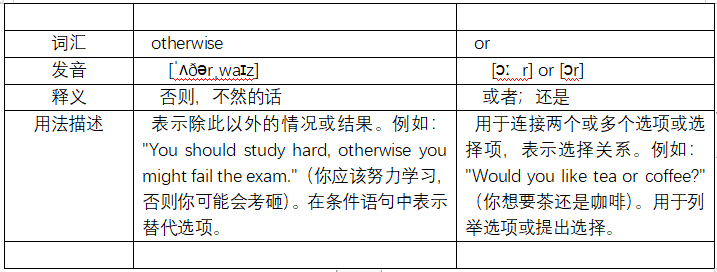
1. 释义区别:
- "Otherwise"的意思是表示否则、要不然、另外的选项或情况。
- "Or"的意思是表示选择,用于提供两个或更多选项之间的选择。
例句:
- Study hard, otherwise you might fail the exam. (努力学习,否则你可能会考试不及格)
- Would you like tea or coffee? (你想要茶还是咖啡?)
2. 用法区别:
- "Otherwise"通常用于表示对比或对比两种不同的情况,提供另一种可能性或选择。
- "Or"用于提供两个或多个选项之间的选择。
例句:
- You need to submit the report by tomorrow, otherwise there will be consequences. (你需要在明天之前提交报告,否则会有后果)
- Should we go to the beach or stay home? (我们应该去海滩还是待在家里?)
3. 使用环境区别:
- "Otherwise"用于描述两种不同的情况或选择,适用于口语和书面语言中的各种语境。
- "Or"用于提供选择,可以用于口语和书面语言的任何情况。
例句:
- Eat your vegetables, otherwise you won't get any dessert. (吃你的蔬菜,否则就不会给你甜点)
- Should we take the bus or walk? (我们应该乘公交车还是步行?)
4. 形象区别:
- "Otherwise"表示提供另一种可能性或情况,强调在不同条件下做出不同的选择或决策。
- "Or"表示提供选择,强调在多个选项中做出自己的决定。
例句:
- Study hard, otherwise you won't succeed. (努力学习,否则你就不会成功)
- Would you like tea or coffee? (你要茶还是咖啡?)
5. 影响范围区别:
- "Otherwise"的影响范围相对较广,可以涵盖更多的可能性和情况。
- "Or"的影响范围较窄,仅限于提供的选择之间的选项。
例句:
- Turn off the lights when you leave, otherwise the electricity bill will be too high. (离开时关掉灯,否则电费会很高)
- Do you want to go to the party or stay at home? (你想去派对还是待在家里?)